Only Measure What Matters
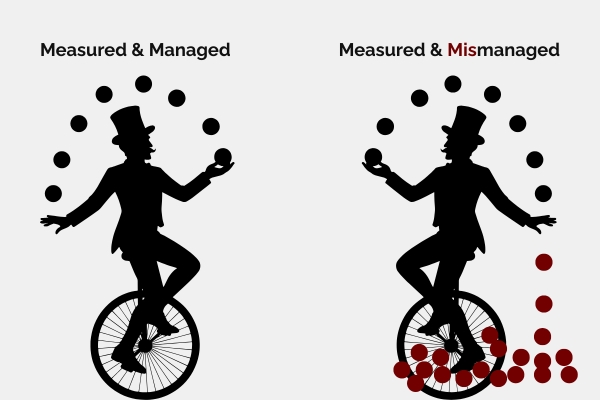
There’s a well-known phrase that is regarded as common wisdom in the world of marketing and business—”What gets measured, gets managed.”
It sounds good, but it’s incredibly dangerous.
Why is it dangerous?
Because it’s true.
When we measure a metric, we feel the need to:
• set goals for it
• make decisions with it
• put time and resources behind it to improve it
And those are great things to do…for important metrics.
Here’s the truth:
Not every metric is important, but when we measure it, we feel the need to manage it.
I was reviewing our marketing dashboard last week for one of the brands I work with and noticed a bunch of metrics on there that have nothing to do with our growth goals.
I think my exact words were, “delete all of this.”
For our current growth goals, there are only about 7 metrics I need to know and make decisions based on—everything else is a distraction (and I hate cluttered dashboards).
A few rules to work by that will save you time, energy, resources, and headspace:
Here’s how to decide what to measure:
—> What metrics have a direct effect on whether or not you’ll hit your goals for the quarter?
—> What metrics, if you didn’t measure them, would negatively impact your business?
…that’s it.
Let’s rewrite this mantra for the good of businesses everywhere:
What gets measured, gets managed, so be careful to only measure what matters, or you’ll waste time and resources managing what never should have been measured to begin with.
Obvious but necessary to say: I am not saying to avoid data collection. Collect as much data as you can; it is often very useful. The distinction I'm making in this article is that your dashboards don't need EVERYTHING. Stay clear on what is significant.
-Dustin
